
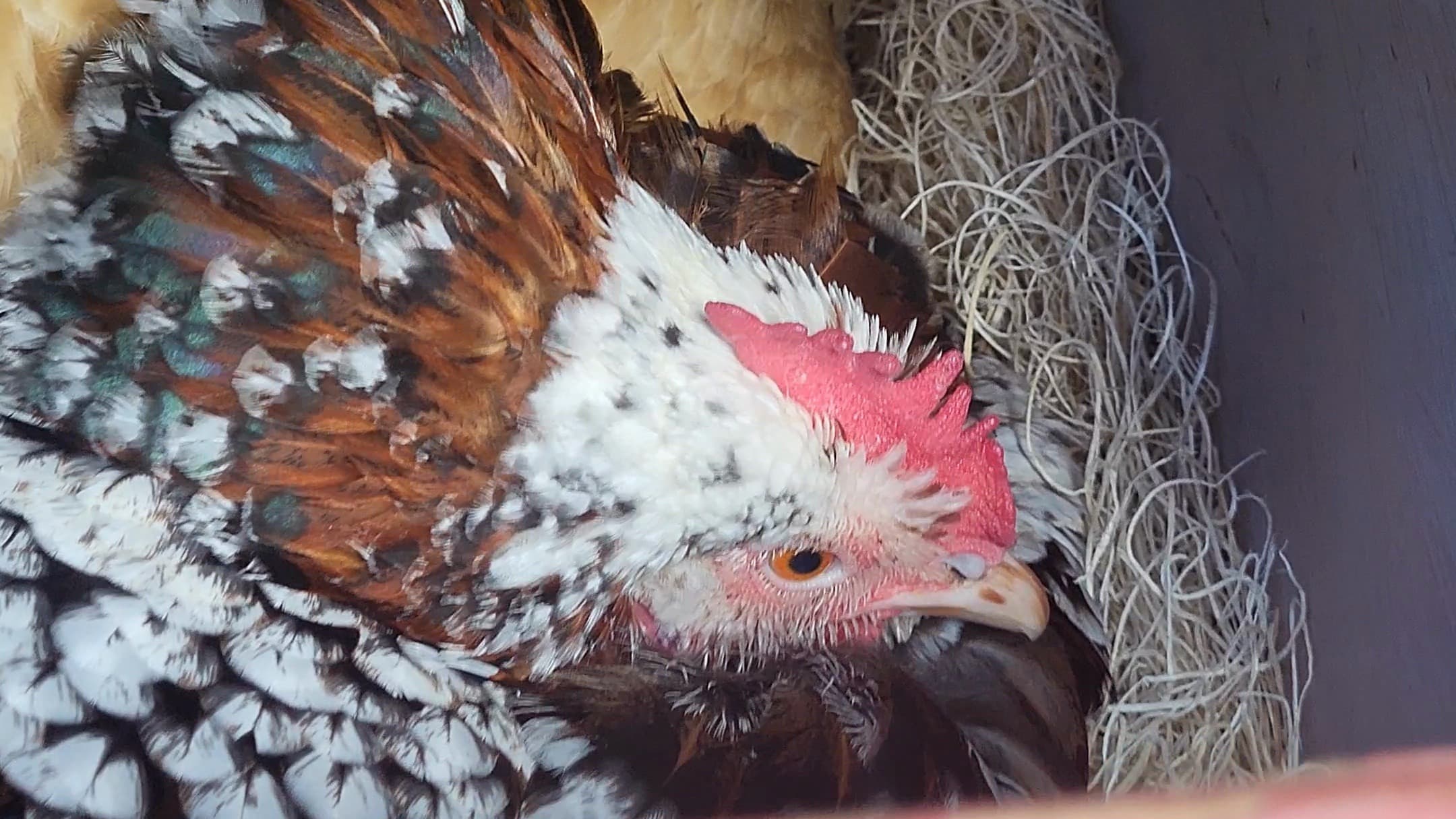
You walk out to the coop expecting to collect eggs and instead find a puffed-up, growling hen who flattens herself across the nesting box like she owns it. She pecks your hand, shrieks when you try to move her, and refuses to leave for anything short of a natural disaster. Congratulations. You have a broody hen. And if you don't have fertile eggs for her to hatch, this behavior is not just annoying. It is actively harmful to her health and disruptive to the rest of your flock.
Broodiness is one of the most powerful hormonal drives in the poultry world. A broody hen will sit on an empty nest, unfertilized eggs, golf balls, or literally nothing at all. She doesn't know whether her eggs can hatch. She doesn't care. Her hormones are telling her to sit, and she will obey that signal until baby chicks peep underneath her or until you intervene. Without either of those triggers, some hens will sit for weeks or even months, losing dangerous amounts of body weight and risking serious illness. This guide covers how to spot broodiness early, why it matters, which breeds are most prone to it, and the full range of methods that actually work to break the cycle, from gentle first steps to the gold standard broody breaker cage.
What Is Broodiness and Why Does It Happen?
Broodiness is a hormonal state in which a hen's body tells her to stop laying eggs and start incubating them. It is driven primarily by the hormone prolactin, which surges after egg-laying and temporarily shuts down ovulation. In a normal cycle, prolactin levels drop after the egg is laid and the hen hops off the nest to resume her day. In a broody hen, those levels stay elevated, locking her into incubation mode. She will seek out a dark, private location, settle onto a nest, and begin the 21-day vigil that her instincts demand.
The critical thing to understand is that broodiness has nothing to do with whether a rooster is present, whether the eggs are fertile, or whether there are any eggs at all. A hen cannot assess the fertility of what she is sitting on. Her body simply tells her to sit, and she follows the command. Under natural conditions, the peeping of hatching chicks is what finally breaks the hormonal loop and signals her to stop sitting. Without that signal, she never receives the "all clear" and can continue brooding indefinitely.
Several factors contribute to broodiness. Longer daylight hours and warmer temperatures in spring and summer trigger hormonal shifts that make brooding far more common during these months. Genetics play a major role as well. Heritage breeds retain much stronger broody instincts than production hybrids, which have had the tendency selectively bred out of them over generations. And environmental cues matter: a pile of eggs accumulating in a dark, cozy nesting box is one of the strongest triggers for pushing a hen over the edge into full broodiness.
How to Recognize a Broody Hen
Once you have dealt with your first broody, you will never miss the signs again. The behavior is unmistakable and quite different from a hen who is simply taking her time laying an egg. Here are the telltale indicators:
- She refuses to leave the nesting box. The most obvious sign is a hen who is sitting on the nest every single time you check. A laying hen visits the box for 20 to 30 minutes. A broody hen is there for hours, all day, and all night. She leaves only once or twice daily to eat, drink, and relieve herself before rushing back.
- She puffs up, growls, and pecks. When you reach in to collect eggs, she will flatten her back, fan out her tail feathers, and make a low, throaty growling sound. Many broodies will peck hard enough to draw blood. Gloves are advisable.
- She makes a distinctive clucking sound. Broody hens produce a rapid, rhythmic "ticking" cluck that is completely different from their normal vocalizations. This is actually the voice she would use to call chicks to her, and she begins using it even before any chicks exist.
- She flattens on the ground when removed. If you pick her up and set her down outside, she will spread her wings, press her body to the ground, and crouch as if she is protecting eggs right there on the dirt. Then she will make a beeline back to the nesting box.
- She pulls out her breast feathers. A broody hen will literally "feather the nest" by plucking feathers from her own chest and belly, lining the nesting box with them. This creates a bare patch of warm skin called a brood patch, which allows her body heat to transfer directly to the eggs. If you see loose feathers in the nesting box and a hen with a bare breast, she is broody.
- Her droppings are enormous and foul-smelling. Because she holds everything for hours rather than eliminating throughout the day, a broody hen produces massive, concentrated droppings that are among the most pungent things you will encounter in chicken keeping.
- Her comb turns pale. As broodiness continues, reduced food and water intake causes her comb to lose its bright red color. Dull, pale combs are a reliable indicator that she has been sitting for too long.
Why You Need to Gently End Broodiness
Some keepers take the approach of "let nature take its course" and allow a broody hen to sit indefinitely. Unless she is actually hatching fertile eggs, this is a mistake. The physical toll of broodiness is significant, and the longer it continues without producing chicks, the worse the consequences become for the hen and for your flock as a whole.
Health Risks to the Hen
A broody hen eats roughly 80% less than her normal intake. She drinks far less water than she needs. Over three weeks, this drastic reduction causes noticeable weight loss, muscle wasting, and nutritional deficiency. But unlike a hen who is actually incubating fertile eggs, a broody sitting on an empty nest never gets the signal to stop. She can sit for four, six, even eight weeks or longer. At that point, malnutrition and dehydration become genuinely dangerous. In hot weather, when coop temperatures climb and the nesting box can feel like an oven, dehydration can become fatal quickly. A broody hen also becomes a magnet for external parasites like mites and lice, because she creates the warm, dark, damp environment that these pests thrive in.
Egg Production Loss
A broody hen stops laying entirely once she commits to sitting. She will not resume laying until broodiness breaks, and even then it typically takes an additional one to three weeks for her hormones to normalize and egg production to restart. If she sits for four weeks before you break her, you can easily lose six to eight weeks of eggs from that single hen. Multiply that across several broodies and the impact on a small flock is substantial.
The Contagion Effect
Broodiness is widely considered "contagious" among experienced keepers. When one hen goes broody, something about her behavior and hormonal presence seems to trigger the instinct in other hens nearby. One broody can quickly become two or three. We have experienced this firsthand. Right now, three of our hens are broody at the same time: a Buff Orpington, a Plymouth Rock, and an English Sussex. All three are sitting on nonexistent eggs, and every time another hen lays, they snatch the egg and tuck it underneath themselves. We have to check under each broody multiple times a day to make sure they haven't stolen freshly laid eggs from the other hens.
Nesting Box Disruption
A broody hen will monopolize the nesting box she has chosen, which is almost always the same box every other hen wants to use. This leads to squabbling, jockeying for position, broken eggs, and hens being forced to lay on the floor or in hidden locations around the property. Broken eggs can also lead to the dangerous habit of egg eating, which is extremely difficult to stop once it starts.
Which Breeds Are Most Prone to Broodiness?
Broodiness varies enormously by breed. Heritage breeds that have retained their natural maternal instincts are far more likely to go broody than production hybrids that have been selectively bred for maximum egg output. If you keep breeds on the "highly broody" list, dealing with broodiness is not a question of if but when.
| Broodiness Level | Breeds |
|---|---|
| Highly broody | Silkies, Cochins, Buff Orpingtons, Brahmas, Sussex, Australorps |
| Occasionally broody | Plymouth Rocks, Wyandottes, Easter Eggers, Speckled Sussex |
| Rarely broody | Leghorns, Rhode Island Reds, Sex-Links, Anconas, Hamburgs, most production hybrids |
Even within breeds known for broodiness, individual temperament matters. You can have five Buff Orpingtons and only two of them will reliably go broody. Silkies, however, are nearly guaranteed to go broody and are famous for sitting on anything, anywhere, with very little provocation. First-year pullets rarely go broody. The behavior typically appears in hens who are at least one year old and have already been through a full laying season.
How to Gently End Broodiness: Methods from Gentle to Gold Standard
Breaking broodiness is not about punishing the hen. It is about disrupting the hormonal feedback loop that keeps her locked in incubation mode. The key physiological factor is body temperature. A broody hen raises her internal temperature to keep eggs warm. Her bare brood patch and her warm abdomen create a cozy pocket of heat. To break broodiness, you need to cool her underside, deny her the cozy nesting environment, and encourage her to return to normal chicken activities. Here are the methods ranked from the gentlest starting point to the most reliable intervention for stubborn cases.
Level 1: Frequent Removal and Egg Collection
The first line of defense is simple and should begin immediately. Remove the broody hen from the nesting box and collect any eggs as quickly as possible, multiple times per day. Carry her to the far end of the run or pasture and scatter treats to distract her. Close off her preferred nesting box if you can. Remove the nesting material from her chosen box so that it is bare and uninviting. After dark, take her off the nest one final time and place her on the roosting bar. Since chickens cannot see well in the dark, she will usually stay put for the night rather than risk navigating back to the box.
This method works best when broodiness is caught within the first day or two. If she has only been sitting for a day, frequent disruption combined with egg removal can sometimes break the cycle within 48 hours. However, once a hen has been broody for more than a few days, this approach alone is rarely enough. She will simply march right back to the nest every time you set her down.
Level 2: Cold Water Dip
The theory behind the cold water method is straightforward. A broody hen maintains an elevated body temperature, particularly across her bare brood patch and vent area. Cooling this area can help disrupt the hormonal signal that keeps her brooding. To do this, you gently lower the hen's lower body into a basin of cool (not ice cold) water, submerging her chest and vent area for several minutes. Some keepers place a towel over her head to keep her calm during the process.
We have used this method with our three current broodies and can report honestly that the results are mixed. It does seem to "reset" them briefly. After a cold water dip, a hen will usually stay off the nest for a while, occupying herself with preening and drying her feathers. But in our experience, the effect is often temporary, sometimes lasting only 30 minutes before she waddles right back to the nesting box and settles in again. We have been doing cold water dips alongside three-times-daily removal, and our Buff Orpington and Plymouth Rock have resisted breaking for weeks.
A few important guidelines if you use this method: only do cold water dips when the weather is warm enough for the hen to dry safely outdoors. Never use ice water. Never submerge the hen's head. Allow her to air dry naturally rather than blow-drying, as the preening process itself is a useful distraction. And understand that for truly committed broodies, this method may not be sufficient on its own.
Level 3: The Broody Breaker Cage (The Gold Standard)
When gentler methods fail, the broody breaker cage is the most reliable and widely recommended solution among experienced keepers, poultry veterinarians, and extension services. It is sometimes called "chicken jail" or a "broody buster," and while the name sounds harsh, it is actually a humane and effective approach that addresses the root cause of broodiness rather than just temporarily masking it.
The broody breaker works by creating an environment that is the exact opposite of what a broody hen wants. She craves dark, warm, private, and cozy. The broody breaker gives her bright, cool, open, and boring.
How to set up a broody breaker:
- Use a wire-bottomed cage. A wire dog crate, rabbit hutch, or custom cage made from hardware cloth all work. The critical feature is a wire floor with no bedding, no nesting material, and nothing soft to settle into. Remove the plastic tray if your dog crate has one.
- Elevate the cage. Place it on bricks, cinder blocks, wooden beams, or sawhorses so that air flows freely underneath. This airflow is the key mechanism. Cool air circulating under the wire floor reaches her brood patch and gradually lowers her body temperature, which is what actually interrupts the hormonal cycle.
- Place it in a bright, well-lit area. Inside the run where she can still see and hear the flock is ideal. The social contact reduces stress and makes reintegration easier. Avoid garages, barns, or isolated locations unless necessary.
- Provide food and water. Attach a water container and feed dish to the sides of the cage. A broody who has been neglecting herself may actually eat and drink more once she has no nest to obsess over.
- Do not add a roost. The goal is to prevent her from getting comfortable enough to settle into a brooding position. A roost gives her something to hunker down on.
- Keep her in 24 hours a day. This is important. Letting her out at night to roost with the flock almost always restarts the broody cycle, because she will go straight back to the nesting box. She stays in the cage day and night until she breaks.
How long does it take?
| How Early Broodiness Was Caught | Typical Time in Broody Breaker |
|---|---|
| Within 1-2 days of onset | 1-2 days |
| After 3-7 days of brooding | 3-4 days |
| After 2+ weeks of brooding | 5-7 days |
| Extremely stubborn or serial broody | Up to 7-10 days, possibly repeated |
How to know when she is broken: Each morning, observe her behavior in the cage. When she is walking around actively, eating and drinking normally, and making normal vocalizations rather than the broody "ticking" cluck, she may be ready. Let her out and watch closely. If she runs straight for the nesting box, puffs up, and tries to settle in, she goes back in the cage for another day or two. If she scratches the ground, dust bathes, interacts with the flock, and shows no interest in the nesting boxes, she is broken.
What Not to Do
There are several approaches that circulate online and in older poultry resources that are either ineffective, unnecessarily stressful, or both. Knowing what to avoid saves time and spares your hen unnecessary suffering.
- Do not dunk her in ice water. There is a significant difference between a cool water dip to the lower body and submerging a hen in ice water. Ice water is a shock to her system and the stress it causes is disproportionate to any benefit. Cool tap water is sufficient if you use the water method at all.
- Do not assume she will "snap out of it" on her own. Chickens do not have a built-in timer that tells them to stop sitting after 21 days. Without hatching chicks to trigger the end of the cycle, some hens will brood for eight weeks or longer. The health consequences of letting a hen sit indefinitely on an empty nest are real and can be fatal.
- Do not simply remove the eggs and expect that to work. Taking eggs away does not break broodiness. A hen who is hormonally committed to sitting will brood on an empty nest, a bare floor, or a pile of dirt. The eggs are not the cause. The hormones are.
- Do not be inconsistent. Removing her from the nest once or twice a day and then letting her return defeats the purpose. The hormonal cycle needs sustained disruption. Whatever method you choose, commit to it consistently.
After Broodiness Breaks: Recovery and Prevention
Once a hen breaks from broodiness, expect a recovery period before she returns to normal egg production. Her hormones need time to normalize, and her body needs to rebuild condition after weeks of reduced food and water intake. Most hens resume laying within one to three weeks after breaking, but some take longer, especially if the broodiness was prolonged.
Support her recovery with good nutrition. High-protein treats like mealworms, black soldier fly larvae, or scrambled eggs help her rebuild muscle and feather condition. Make sure she has access to fresh water and is eating her regular feed consistently. Watch her comb color. A healthy, recovering hen's comb will gradually return to bright red as her circulation and nutrition improve.
Prevention strategies to reduce future broodiness:
- Collect eggs frequently. A pile of eggs in the nesting box is one of the strongest triggers for broodiness. Collect at least once daily, twice if your schedule allows.
- Keep nesting boxes well-lit. Broody hens prefer dark, secluded locations. Nesting boxes that are too dark and cozy can encourage the behavior. Some light reaching the boxes can help discourage prolonged sitting.
- Break broodiness immediately when you spot it. The longer you wait, the harder it is to break and the more likely it is to spread to other hens.
- Separate broody hens from the flock. If one hen goes broody and you have breeds prone to "contagious" broodiness, separating her into the broody breaker quickly can prevent the hormonal chain reaction.
- Consider breed selection. If broodiness is a persistent problem and you are adding to your flock, choosing breeds with lower broody tendencies can reduce the frequency of these episodes over time.
When Broodiness Is a Good Thing
Everything in this guide assumes you are not trying to hatch chicks. But if you do want to expand your flock naturally, a broody hen is one of the most valuable assets you can have. She eliminates the need for an incubator, a brooder box, and a heat lamp. She handles temperature regulation, humidity, egg turning, and chick rearing entirely on her own, and she does it better than any piece of equipment you can buy.
If you have a broody hen and access to fertile eggs, you can slip them under her and let nature take its course. Mark the fertile eggs with a permanent marker so you can distinguish them from any new eggs that other hens sneak into the nest. Check daily and remove unmarked eggs to prevent mixed development stages. A standard hen can cover approximately 10 to 12 eggs proportionate to her size.
The ideal broody for hatching is a hen who has demonstrated commitment by sitting tight for at least two to three consecutive days before you give her fertile eggs. This ensures she is genuinely committed and not just in the early, breakable phase of broodiness. Heritage breeds like Silkies, Cochins, and Buff Orpingtons are particularly reliable mothers who will see the full 21-day incubation through to hatch and raise the chicks attentively afterward.
Key Takeaways
Broodiness is a natural, hormonal behavior that serves an important purpose in the wild but creates real problems in a backyard flock when hatching is not the goal. The signs are unmistakable once you know what to look for: all-day nest sitting, aggressive behavior, feather plucking, pale combs, and those famously terrible droppings. The longer you let it go, the harder it becomes to break and the greater the risk to the hen's health.
Start with frequent removal and egg collection. Try a cool water dip if the weather allows. But if those methods are not getting the job done within a few days, do not hesitate to set up a broody breaker cage. The wire-bottom, elevated cage method is the gold standard for a reason. It directly addresses the physiological driver of broodiness by cooling the brood patch and disrupting the hormonal loop. Most hens break within three to five days. It is humane, it is effective, and it gets your hen back to being a healthy, active, egg-laying member of the flock far faster than any other approach.
Sources
- Fresh Eggs Daily - 9 Reasons to Break a Broody Hen
- Fresh Eggs Daily - How to Break a Broody Hen
- Fresh Eggs Daily - Top Ten Signs of a Broody Hen
- The Chicken Chick - The Broody Breaker: When a Hen's Mood to Hatch Should be Interrupted
- Garden Betty - How to Stop a Broody Hen: 5 Humane Ways That Work
- Homestead and Chill - The Best Way to Break a Broody Hen
- Star Milling Co. - What Is a Broody Hen and How to Break Up a Broody Hen
- BackYard Chickens - Broody Breaking ala Aart
- Homesteading Family - Broody Hen Management